




![Gold/Yellow Travertine Mosaic - 2x4 Brick]()
![Gold/Yellow Travertine Mosaic - 2x4 Brick]()
![Gold/Yellow Travertine 2x4 Brick split-face mosaic on a patio side wall]()
Choose options View details
 See It in Your Space
ANY 5 SAMPLES: $25 TOTAL. FREE STANDARD SHIPPING.


![Straight-on close-up of the Gold/Yellow Travertine 1x2 Diamond Mosaic backsplash]()

![Gold/Yellow Travertine Mosaic - 1x2 Brick]()
Choose options View details

![Gold yellow travertine Versailles pattern pavers installed on an outdoor patio]()
![Gold/Yellow Travertine Tile - Versailles Pattern]()
Choose options View details
![Close-up side angle showing the filled honed surface, straight edge, and thickness of an 18x18 gold yellow travertine tile]()
![18x18 filled and honed gold yellow travertine tiles installed on a floor in a close-up interior application]()
Choose options View details
![Gold/Yellow Travertine Tile - 12x12]()
![Four 12x12 filled and honed gold yellow travertine tiles arranged in a 2x2 layout]()
![Close-up side angle showing the filled honed surface and straight edge of a 12x12 gold yellow travertine tile]()
Choose options View details
![Single 6x6 tumbled gold yellow travertine tile on a clean studio background]()
![Close-up side angle showing the tumbled surface and softened edge of a 6x6 gold yellow travertine tile]()
![6x6 tumbled gold yellow travertine tile installed on a shower floor with a drain]()

![Single 4x4 tumbled gold yellow travertine tile]()
![Close-up country style backsplash made with 4x4 tumbled gold yellow travertine tile above a countertop]()

![Single horizontal 3x6 tumbled gold yellow travertine tile with softly rounded edges on a clean studio background]()
![Close-up side angle showing the tumbled surface and softened edge of a horizontal 3x6 gold yellow travertine tile]()
![3x6 tumbled gold yellow travertine tiles installed on a wall in a horizontal subway pattern]()


Compare products
Gold and Yellow Stone Tile with Natural Warmth
Gold and yellow stone tile brings sunlit warmth to floors, walls, backsplashes and outdoor spaces. This collection gathers our warm-toned stones in one place: golden travertine, honey onyx and gold-brown travertine blends, in field tiles, mosaics, trims and pattern sets.
Every piece is natural stone, so shade, banding and pores vary from tile to tile. Order a sample and blend tiles from several boxes during installation for an even, natural look.
Compare the Gold Stones
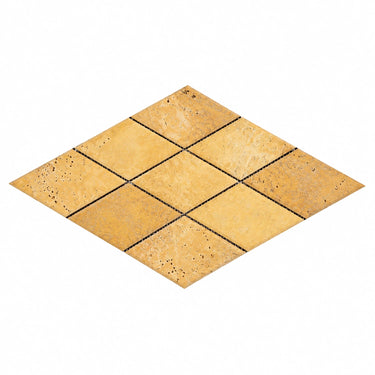
Gold travertine has a honey-to-mustard background with soft banding and the natural pores typical of travertine. It comes in tumbled, honed, filled & honed and split-faced finishes, plus mosaics, trims and a Versailles pattern set.
Honey onyx shows deep amber color and strong banding with a glassy, polished surface. Like most decorative stone sold as onyx, it is banded calcite rather than true onyx, which is a banded silica mineral. What is onyx? It works on floors, walls and feature areas; check each product's recommended uses.
Antico Onyx travertine and our mixed Ivory, Noce and Gold travertine mosaics combine gold with cream and brown tones for a blended, old-world surface. Antico Onyx also comes in pool coping and a Versailles pattern set.
Plan Gold Stone by Room
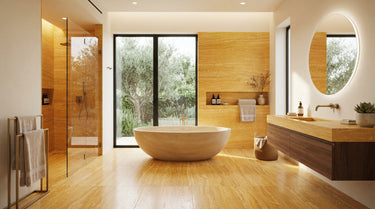
In a bathroom or kitchen, gold stone pairs well with white cabinetry, warm wood and brass or bronze fixtures. A mosaic can frame a niche or range wall while field tile keeps the main surfaces calm. Around a fireplace, honey onyx or split-faced travertine creates a strong focal point.
For patios and pools, look for Antico Onyx pool coping and the travertine pavers and coping in our outdoor and pool & spa collections, and confirm each product's recommended uses before ordering.
Finish, Sealing and Care
Tumbled and honed finishes give a soft, matte look; polished onyx reflects light and deepens the color. Honed vs polished explains the difference. Seal travertine and onyx as recommended for the product and location, and clean with a pH-neutral stone cleaner. Avoid acidic or abrasive cleaners.