


Travertine Pool Tile
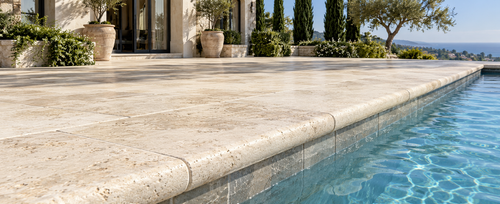
Travertine tile, pavers and coping for pools and spas.
Pick by spot

Pick by look

Filled or unfilled
Care
Questions
How do I care for travertine outdoors?
Rinse with clean water, treat algae and moss with a mild bleach solution suited to the stone and pool area, and avoid high-pressure washing. An impregnating sealer helps it resist stains.
What is filled travertine?
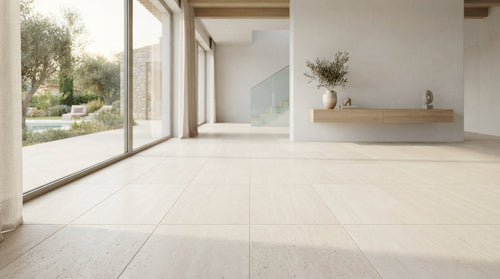
Travertine is naturally porous, so its face has small holes and pits. Filled travertine has those holes filled at the factory for a smoother, more uniform surface. Unfilled travertine leaves them open for a textured, rustic look. Both are the same stone.
Do I need to seal travertine near a pool?
Not always. Put a few drops of water on the stone for about 15 minutes. If it darkens, a sealer can help. Sealing makes the stone more stain resistant, not stain proof, and it does not stop etching. Check that the sealer is labeled for your stone and the location (interior, exterior, shower or floor).
How do I care for travertine?
Travertine is a calcium-carbonate stone, like marble. Clean with pH-neutral products, never vinegar or acidic cleaners, and blot spills quickly. An impregnating sealer helps it resist stains. On filled travertine, watch for loose filler.