Travertine mosaic sheets in brick, herringbone, hexagon, diamond and mini Versailles patterns, in ivory, noce, walnut and gold tones. Great for backsplashes, shower walls and accents; order a sample to see the finish.
Travertine mosaic tile combines the warmth and natural movement of travertine with the detail of smaller-scale patterns. This collection includes ivory, walnut, noce, silver, gold and blended travertine mosaics for backsplashes, bathroom walls, shower areas, floors and decorative features where the individual product is suitable.
Travertine forms with naturally occurring pores, tonal movement and mineral markings. These characteristics are expected rather than defects and help distinguish genuine stone from manufactured surfaces. Color, pore structure and texture can vary between pieces, sheets and production lots.
Explore Travertine Colors
Ivory and cream travertine mosaics create a lighter, quieter foundation that works with warm white, beige and natural wood tones. Walnut and Noce travertine introduce deeper brown and caramel movement for traditional, Mediterranean and rustic interiors.
Silver travertine blends cool gray, beige and taupe tones, while gold and yellow travertine add warmer mineral color. Mixed mosaics combine complementary travertine varieties within one pattern. Antico Onyx Travertine introduces more dramatic translucent-looking movement while remaining part of this collection’s specifically identified travertine blends.
Browse the broader travertine tile collection when coordinating mosaics with matching field tiles, modular patterns, trims, pavers or coping.
Choose a Mosaic Pattern
Herringbone mosaics create directional movement and can be used across a full surface or as a focused feature. Hexagon mosaics provide a clean geometric arrangement, while square mosaics create a quieter grid with clearly defined grout joints.
Brick patterns range from compact mini-brick mosaics to longer rectangular pieces. Pinwheel, diamond and other decorative arrangements introduce contrasting scales and repeating geometry. Traditional modular designs, including Versailles mosaics and OPUS mini-patterns, recreate the rhythm of larger-format stone layouts on a smaller sheet-mounted scale.
Pattern scale affects the finished appearance, required cuts and installation time. Review the listed chip and sheet dimensions rather than judging size from a close-up photograph alone.
Compare Tumbled, Honed and Polished Finishes
Tumbled travertine has softened edges and an aged, textured appearance. It is often selected for relaxed, rustic and Mediterranean designs. Honed travertine creates a smoother, lower-sheen surface, while polished stone reflects more light and emphasizes color and mineral movement.
Brushed and split-face mosaics provide additional texture. Deeply textured split-face products are generally better suited to decorative walls and dry or low-splatter areas because their uneven surfaces require more involved cleaning. Always review the individual product’s recommended applications before choosing a finish.
Plan Backsplashes, Bathrooms and Shower Areas
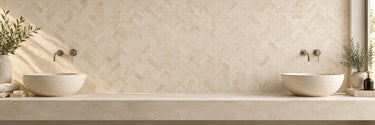
Travertine mosaics can cover an entire backsplash or create a framed feature behind a range, vanity or beverage station. Smaller patterns add detail without requiring the visual weight of larger field tiles.
A product suitable for a wall is not automatically appropriate for a wet floor. Confirm the exact mosaic, finish, chip size and installation location with a qualified installer.
Order Samples and Plan Natural Variation
Order samples to compare travertine colors and finishes under the project’s natural and artificial lighting. A sample helps establish the general character of the stone but cannot represent every variation that may appear across a full order.
Purchase the required quantity together when possible to improve production-lot consistency. Before installation, open multiple boxes and dry-lay representative sheets. Blend lighter, darker and more strongly marked pieces throughout the surface instead of installing one box at a time.
Installation, Sealing and Care
Travertine installation may require substrate preparation, layout planning, stone-compatible setting materials and sealing. Some mosaics may benefit from sealing before grouting, especially when the stone is porous or the grout contrasts with the tile. Requirements vary by product, finish, grout and sealer.
For routine care, remove loose grit, clean spills promptly and use a stone-safe, pH-neutral cleaner. Avoid acidic products such as vinegar and abrasive cleaners unless their compatibility with the selected stone has been confirmed. Follow the manufacturers’ instructions and consult a qualified tile installer regarding installation and ongoing maintenance.
Brick, herringbone, hexagon, diamond, random-strip and mini Versailles patterns, plus classic square mosaics, in several travertine colors. All stone mosaics
Are travertine mosaics good for a backsplash?
Yes, they are a popular choice. Travertine is porous, so sealing and gentle cleaning keep it looking its best. Travertine care guide
Tumbled or honed mosaics?
Tumbled has softened edges and an aged look; honed is smoother and more even. A sample shows the difference. Shop travertine




 See It in Your Space


 $9.95/ sheet (1 sq ft) / Silver Pewter Blend Travertine Mosaic - 3-pcs. Mini-Pattern Non-Interlocking


